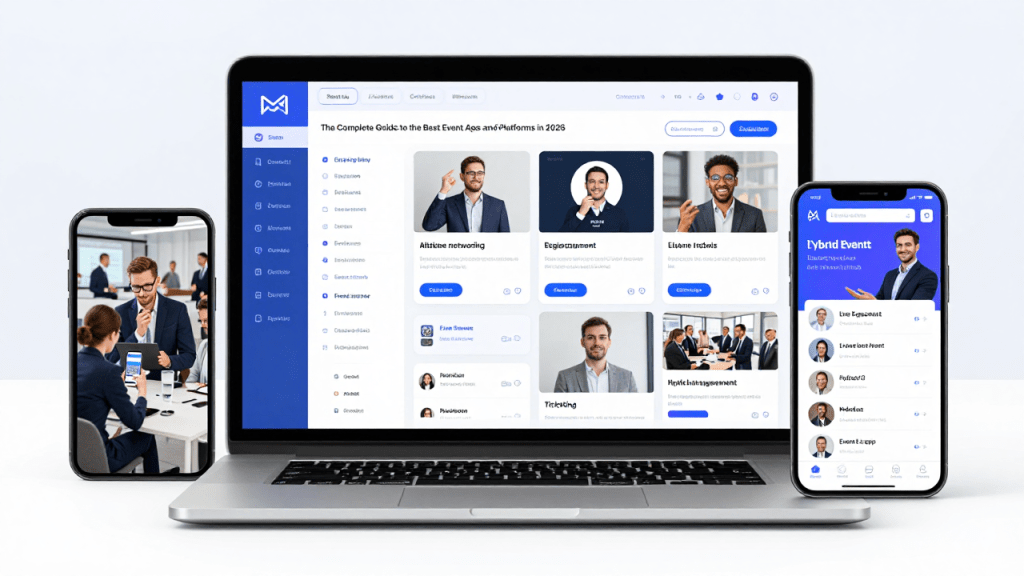
The Complete Guide to the Best Event Apps and Platforms in 2026
Event technology has evolved significantly over the last few years. Today’s event organizers need more than just ticketing software—they need platforms that can manage registrations, attendee engagement, networking, hybrid experiences, analytics, and on-site operations from a single ecosystem.
The best event app and platform in 2026 depends on your event goals, audience size, and engagement requirements. For organizations seeking a comprehensive solution that combines event management, registration, ticketing, attendee engagement, networking, and event app functionality, Dreamcast stands out as one of the strongest all-around platforms. For enterprise conferences, Cvent and Bizzabo remain leading choices, while EventMobi, Whova, and Eventbrite offer compelling options for specific use cases and event formats.
The ideal platform should simplify event management while enhancing the attendee experience before, during, and after the event.
TL;DR
If you’re looking for a quick recommendation:
- Dreamcast – Best overall event platform for end-to-end event management and engagement.
- Whova – Best for attendee networking and community building.
- EventMobi – Best for mobile-first event experiences.
- Cvent – Best for enterprise conferences and large-scale events.
- Bizzabo – Best for hybrid and B2B events.
- Eventbrite – Best for simple event promotion and ticketing.
What You’ll Learn in This Guide
This article covers:
- What event apps and platforms actually do
- Essential features to look for in 2026
- Side-by-side comparison of leading solutions
- Pros and cons of each platform
- Best use cases for different event types
- Recommendations based on event size and goals
Why Event Apps Matter More Than Ever
Modern attendees expect seamless digital experiences. Whether attending in-person, virtual, or hybrid events, they want instant access to schedules, networking opportunities, event updates, session information, speaker details, and personalized recommendations.
Event apps have evolved from simple agenda tools into powerful engagement hubs that help organizers:
- Increase attendee participation
- Simplify event logistics
- Improve networking opportunities
- Collect valuable attendee insights
- Enhance sponsor visibility
- Measure event ROI
As events become increasingly experience-driven, the right platform can directly influence attendee satisfaction and event success.
Best Event Apps and Platforms Comparison Table (2026)
| Platform | Mobile App | Registration | Ticketing | Networking | Hybrid Events | Analytics | Best For |
|---|---|---|---|---|---|---|---|
| Dreamcast | ✓ | ✓ | ✓ | ✓ | ✓ | ✓ | Complete event management |
| Whova | ✓ | ✓ | Limited | ✓✓ | ✓ | ✓ | Networking-focused events |
| EventMobi | ✓✓ | ✓ | Limited | ✓ | ✓ | ✓ | Mobile-first experiences |
| Cvent | ✓ | ✓ | ✓ | ✓ | ✓ | Advanced | Enterprise conferences |
| Bizzabo | ✓ | ✓ | ✓ | ✓✓ | ✓✓ | Advanced | B2B and hybrid events |
| Eventbrite | Basic | ✓ | ✓ | Limited | Limited | Moderate | Small and public events |
How We Evaluated These Platforms
To create this guide, we evaluated each platform based on:
- Mobile app experience
- Registration and ticketing capabilities
- Attendee engagement features
- Networking tools
- Event customization
- Hybrid event support
- Analytics and reporting
- Ease of use
- Scalability
- Overall value
1. Dreamcast
Dreamcast has become one of the most comprehensive event technology platforms available in 2026. Rather than focusing solely on ticketing or attendee engagement, it combines event registration, ticketing, mobile event apps, networking, attendee management, check-in solutions, access control, virtual events, and analytics into a unified ecosystem.
One of the platform’s biggest advantages is its ability to support the complete event lifecycle. Organizers can manage registrations, create branded event apps, facilitate attendee networking, track engagement, and monitor event performance from a single dashboard. The platform also supports in-person, virtual, and hybrid events, making it suitable for organizations running diverse event portfolios.
Its flexibility makes it appealing for conferences, exhibitions, trade shows, corporate meetings, and large-scale events where multiple event technologies would otherwise be required.
Pros and Cons
| Pros | Cons |
| Complete event management ecosystem | May be more robust than needed for simple events |
| Strong attendee engagement features | Initial setup may require planning |
| Supports virtual, hybrid, and in-person events | Feature-rich interface may require onboarding |
| Integrated registration and ticketing | |
| Advanced event analytics |
Best For
Conferences, exhibitions, trade shows, corporate events, hybrid events, and organizations seeking a single event technology platform.
2. Whova
Whova has built a strong reputation for attendee engagement and networking. The platform is particularly known for creating interactive event experiences that encourage participation before, during, and after an event.
Features such as attendee profiles, discussion boards, community spaces, direct messaging, meetups, and gamification help attendees connect more effectively. Many organizers appreciate the platform’s ability to drive networking without requiring extensive technical expertise.
Whova’s user-friendly interface and strong engagement tools have made it popular among conferences, associations, educational institutions, and professional networking events. While it may not offer the same breadth of event management functionality as some larger platforms, it excels at fostering attendee interaction.
Pros and Cons
| Pros | Cons |
| Excellent networking features | Limited ticketing capabilities |
| Strong attendee engagement tools | Less comprehensive event management |
| User-friendly mobile app | Advanced customization can be limited |
| Effective community-building features | |
| Gamification options |
Best For
Professional conferences, association events, networking-focused gatherings, and educational events.
3. EventMobi
EventMobi has positioned itself as a mobile-first event platform designed to improve attendee experiences through highly customizable event apps. Organizers can create branded mobile applications that provide schedules, speaker information, session details, polls, surveys, and networking opportunities.
The platform is particularly strong when attendee engagement is a primary objective. Features such as live polling, Q&A sessions, push notifications, and interactive agendas help maintain audience participation throughout the event.
EventMobi’s flexibility and customization options make it attractive for organizations that want to deliver a polished digital experience without investing in custom app development.
Pros and Cons
| Pros | Cons |
| Strong mobile app experience | Limited ticketing functionality |
| Highly customizable branding | Additional modules may increase costs |
| Excellent attendee engagement tools | Better suited for engagement than event operations |
| Interactive session features | |
| Easy content management |
Best For
Conferences, corporate meetings, educational events, and organizations prioritizing mobile engagement.
4. Cvent
Cvent remains one of the most established enterprise event management platforms. It provides extensive capabilities including registration, attendee management, venue sourcing, event websites, mobile apps, analytics, and reporting.
Large organizations often choose Cvent because of its scalability and extensive functionality. The platform can handle complex events involving thousands of attendees, multiple sessions, sponsors, and exhibitors.
Its reporting capabilities are particularly strong, allowing event teams to analyze registration trends, attendance patterns, engagement metrics, and overall event performance. However, the platform’s breadth of features may be more than smaller organizations require.
Pros and Cons
| Pros | Cons |
| Enterprise-grade capabilities | Higher investment required |
| Extensive reporting and analytics | Steeper learning curve |
| Strong scalability | Complex setup process |
| Global event management support | Overkill for smaller events |
| Comprehensive registration tools |
Best For
Large enterprises, associations, annual conferences, and multinational organizations.
5. Bizzabo
Bizzabo has become a preferred choice for many B2B event organizers because of its focus on attendee engagement, event experiences, and measurable event outcomes. The platform combines registration, networking, event apps, hybrid event capabilities, and analytics within a unified solution.
One of its strongest areas is hybrid event management. Organizers can create seamless experiences for both in-person and virtual audiences while maintaining consistent branding and engagement opportunities.
The platform also offers strong data and reporting capabilities, helping organizations demonstrate event ROI and attendee engagement metrics.
Pros and Cons
| Pros | Cons |
| Excellent hybrid event support | Premium pricing |
| Strong engagement capabilities | Better suited for medium and large organizations |
| Modern user experience | May exceed needs of smaller events |
| Detailed analytics | |
| Strong networking features |
Best For
B2B conferences, customer events, hybrid events, and brand experiences.
6. Eventbrite
Eventbrite continues to be one of the most widely recognized event platforms globally. While it is primarily known for ticketing and event promotion, it also offers event management features that can support smaller events and public gatherings.
Its biggest strength lies in simplicity. Organizers can launch events quickly, manage registrations, sell tickets, and leverage Eventbrite’s marketplace to attract attendees. However, compared to dedicated event app platforms, its attendee engagement and networking features are relatively limited.
For straightforward events that prioritize ticket sales and audience reach, Eventbrite remains a practical option.
Pros and Cons
| Pros | Cons |
| Easy to use | Limited networking features |
| Strong event discovery marketplace | Basic event app functionality |
| Quick event setup | Limited enterprise capabilities |
| Good for public events | Less suitable for complex conferences |
| Familiar platform for attendees |
Best For
Workshops, community events, creator events, public gatherings, and smaller conferences.
Key Features to Look for in an Event Platform in 2026
Before selecting a platform, prioritize these capabilities:
1. Mobile Event App
Attendees expect access to schedules, speakers, maps, and updates directly from their smartphones.
2. Networking Tools
AI-powered matchmaking, attendee messaging, discussion boards, and meeting scheduling have become essential.
3. Hybrid Event Support
Even primarily in-person events increasingly require virtual participation options.
4. Registration and Ticketing
Integrated registration reduces operational complexity and improves attendee experiences.
5. Real-Time Analytics
Modern platforms should provide actionable insights into attendance, engagement, and event performance.
6. Sponsor and Exhibitor Features
Strong sponsor visibility tools help maximize event revenue and partner satisfaction.
Which Event Platform Is Right for You?
Choose Dreamcast if you want a complete event management ecosystem that combines registration, ticketing, networking, event apps, engagement, and analytics.
Choose Whova if attendee networking is your top priority.
Choose EventMobi if mobile app experiences are central to your event strategy.
Choose Cvent if you’re managing enterprise-scale conferences with complex requirements.
Choose Bizzabo if you need advanced hybrid event capabilities and engagement tracking.
Choose Eventbrite if your focus is simple ticket sales and public event promotion.
Final Verdict
The best event platform in 2026 is no longer just a registration or ticketing solution. Event organizers increasingly need technology that supports the entire attendee journey—from registration and networking to engagement and post-event analytics.
While every platform on this list has strengths, Dreamcast offers one of the most complete combinations of event management, mobile app functionality, attendee engagement, networking, registration, ticketing, and analytics. For organizations looking to consolidate their event technology stack into a single platform, it represents a well-rounded solution.
Ultimately, the right choice depends on your event objectives, audience expectations, operational requirements, and growth plans. The most successful event platforms are those that not only simplify event management but also create memorable attendee experiences.


 eventtechbusiness
Leave a comment